If you have any books or other special things things to offer, we will answer emails and phone calls after we return. Thank you!


Buying, selling and appraising Rare Books in Vancouver. Rare items in ALL fields. 44 years' experience with advanced collectors, archives, and libraries. Past President of the Antiquarian Booksellers' Association of Canada + Member of the Provincial Booksellers Fairs Association (PBFA) in the UK. Recognized and trusted appraiser for fair market value, and donations. bjarnetokerud@gmail.com VISITORS WELCOME!
If you have any books or other special things things to offer, we will answer emails and phone calls after we return. Thank you!
.jpg)
.jpg)


An illustration from ECCE HOMO by George Grosz
Artists of interest:
--Käthe Kollwitz--Joseph Albers
--Oskar Kokoschka--Karl Schmidt-Rottluff
If you have any works of art for sale by these artists, send us a few photos and we can start the process of investigating what you have.
 |
| Click on the photo to get full size |
Polar historian, Doug Wamsley, recently published his third book on arctic explorers. DANCING CHIEF: The Tragic Life of Lieutenant Frederick F. Kislingbury, turns a vast quantity of meticulous and original research into the three stages of Kislingbury’s life (especially his later involvement with the Lady Franklin Bay Expedition) into a very readable and often exciting page turner. The many illustrations, photographs, and extraordinarily detailed and informative maps throughout the text enhance the quick moving narrative, all of which help visualize, in particular, the events within and surrounding the 1881–1884 Lady Franklin Bay Expedition, better known as the Greely Expedition. Although the expedition was not a search to discover the fate of Sir John Franklin and his crew, the challenges and tribulations of wintering in the high arctic, with tragic consequences, were not unlike what Franklin and his crew experienced. Kislingbury’s early life was eventful enough.
Wamsley reveals in visual movie scene format the story of Kislingbury's early successes as a promising young military officer in the unsettled West, especially during his participation in the Great Sioux War. Kislingbury’s achievements are virtually unknown today, yet in his time, his accomplishments were widely recognized. Hard-driving Lieutenant General Philip Sheridan, who later became commander-in-chief of the Army, and Brigadier General Alfred Terry, commander of the Department of Dakota, both openly complimented Kislingbury’s conduct and judgment.
As Wamsley points out:
“As a successful leader of Indian scouts, he worked side-by-side with Indigenous peoples, including the Pawnee and Crow, building relationships based on mutual respect. He succeeded in the field by virtue of an open mind that was prepared to learn from and utilize his companions’ tactics and techniques. By way of but one example, his Indian language skills were considered equal to the West Point graduate Captain William Philo Clark, a self-directed Indian linguistic expert who had made a special study of their sign language. The ties between Kislingbury and his scouts were strong. In the face of life-and-death encounters, his Indian allies risked their own lives in his defense. Kislingbury also worked hard to advance the welfare of the Indians and their families. His companions even adopted a name for him, Dancing Chief, a compliment to Kislingbury’s willingness to participate in their ritual dance.”
Frederick Kislingbury witnessed some of the most significant conflicts of the Indian wars from 1869 through 1880. His path followed the final tragic events from the central plains of Nebraska, Kansas and Colorado to the far southern Texas/Mexican border, and ultimately to the northern plains in the aftermath of Custer’s defeat.
 |
| Click on the photo to get full size |
Quoting from the Introduction: “On August 26, 1881, the crew of the sturdy-built steamship Proteus, under the command of whaleman Captain Richard Pike, bid farewell to the members of the U.S. International Polar Expedition. At Lady Franklin Bay, within five hundred miles of the North Pole, twenty five men prepared themselves for at least one year of isolation. With mixed emotions, they watched their last connection to the outside world fade below the horizon. Freeing the vessel from the packed floes which hemmed her in the harbor, Captain Pike forced the ship through the heavy, treacherous ice of Kennedy Channel. As the transport nudged southward following the coast, Lieutenant Frederick F. Kislingbury, the young and adventurous second-in command, abruptly elected to resign his position and take leave of the expedition.”
Lieutenant Frederick F. Kislingbury joined the expedition to escape the grief of losing two wives, but quickly became estranged from Commander Lieutenant Adolphus W. Greely. His desperate, last-minute dash to catch the departing ship failed, leaving him stranded as an outcast.
Kislingbury's unsuccessful withdrawal from the expedition sealed his fate. The expedition completed two years of scientific work but suffered a disaster when relief ships failed to arrive. A subsequent retreat south led to the tragic outcome at Cape Sabine, off Ellesmere Island, where nineteen of the twenty-five men, including Kislingbury, died from gradual starvation.
Following the disaster, Kislingbury's family believed that Greely's official chronicling of the expedition in THREE YEARS OF ARCTIC SERVICE. An Account of The Lady Franklin Bay Expedition of 1881-84 and the Attainment of The Farthest North (1886) distorted the truth about their relationship and maligned the deceased lieutenant.
Wamsley was able to research primary source materials, including Kislingbury family papers and perspectives. Wamsley’s dedication and passion for telling the full and “true story” of Kislingbury’s life is a major contribution to Polar Literature. And, an exciting bed time read.
Dancing Chief.... is available from:
https://www.amazon.com/Dancing-Chief-Lieutenant-Frederick-Kislingbury/dp/B0GFQ2H8MR/ref=sr_1_1
Doug Wamsley’s other polar related books are: Big Wolf: The Adventurous Life of Lieutenant Frederick G. Schwatka and Polar Hayes: The Life and Contributions of Isaac Israel Hayes, M.D.
We are able to provide a very fine copy in original cloth of the two volume:
International Polar Expedition: Report On The Proceedings Of The United States Expedition To Lady Franklin Bay, Grinnell Land.
By Adolphus W. Greeley Published by Gov't Printing Office, Washington, 1888
RECENTLY ACQUIRED
A Biography of Albert Einstein
published in 1930.
SIGNED BY EINSTEIN


in the year of publication.
Anton Reiser was the pseudonym for Rudolph Kayser, husband to Einstein's stepdaughter Ilse.
Do you have any special treasures, or collections of rare books?
We never stop buying great books. Especially collections. We also purchase special diaries, albums, correspondence and more.
Our date of publication cut off is usually around 1950, with exceptions when books are signed by famous people.
Give us a call or send us an email.
We gladly make house calls!
We are pleased to present our newest catalogue, China in the 19th and 20th Centuries. The Barry Griblin Collection. Part I. This is the first of five parts, encompassing a substantial book and pamphlet collection devoted to Chinese history, culture, travel narratives, view books, and architecture assembled by Barry Griblin.


The PDF for Part 4 can be viewed here

On November 30, 2024 Vancouver's Chinatown Storytelling Centre hosted Dr. Chung’s 99th birthday celebration and a tribute. There were three speakers. His daughter Maria, his son Stephen, and I gave talks that shared anecdotes about his personal life, his contributions as a physician and teacher,
and details of his many decades of passionate collecting.
In my opinion, Dr. Wallace Chung is one of Canada's greatest living collectors of history and culture. His collection at UBC, a rather unique distinction, was entered into UNESCO’s World Register of cultural treasures
in recognition of its important historical value.


Dr. Chung’s donated collections (and there were many) consist of more than 25,000 artifacts, photographs, rare books, ship models, posters, photo albums including vast quantities of highly elusive documents related to Victoria and Vancouver Chinatowns. He also collected anything related to the experiences of Chinese people throughout all of Canada and especially the building of the Canadian Pacific Railway. He was also interested in Canadian history, anything to do with British Columbia, maritime history including ocean liners like the Titanic, the Normandie, the Cunard shipping line and anything to do with the Canadian Pacific Railway and Steamship lines. Most of the maritime treasures were donated to the Vancouver Maritime Museum in two stages.
Earlier, on April 19, 2024, a celebratory inauguration took place for a new gallery that highlights some of the treasures in the Wallace B. Chung and Madeline H. Chung Collection and Phil Lind Klondike Gold Rush Collection which were merged into a dedicated gallery space in the Barber building on the UBC Campus.Here is UBC’s official presentation.
Although there were many, many booksellers and antique dealers in Canada and the United States who have helped Dr. Chung with his collecting, it was satisfying to see some of the publications, posters and artifacts that I sold him over four decades prominently displayed in the new gallery.
Bjarne Tokerud
By Bjarne Tokerud
Published in the Rare Book Monthly
March 1 2024
The story of the discovery and sale of Andreas Vesalius's annotated copy:
DE HUMANIS CORPORIS FABRICA LIBRI SEPTEM, published in Basel in 1555.

Photographs © Bjarne Tokerud. Copyright reserved.

For a superb analysis of the historical importance of the annotations, Dr. Vivian Nutton's article can be found by clicking here.
Dr. Vivian Nutton: "Vesalius, as contemporaries agreed, was a brilliant anatomist, and his book changed the whole development of anatomy. "


Barbarian Press produces some of the finest Private Press publications in Canada, possibly even in North America...

 | |||
We will also be offering--

Paul
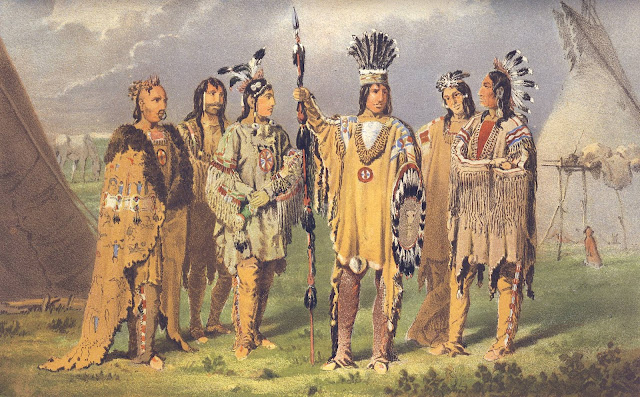
Kane (1810-1871) is best known for his paintings and sketches of Indigenous
people during the 1840s. After a short
sojourn between Toronto and Sault Ste. Marie in 1845, he secured the support of
the Hudson’s Bay Company, and travelled with their canoe brigades to western
Canada. He visited the Red River
settlement, and then passed through the Saskatchewan valley, across the Rocky
Mountains and down the Columbia River to Fort Vancouver in the Oregon
Territory, and thence along the shores of Puget Sound to Vancouver Island where
he stopped off at Fort Victoria. Kane
sketched and painted the people he encountered on his travels, and documented
their way of life. Upon
his return to Toronto, Kane exhibited his work.
The exhibition met with great success.
With the support of Sir George Simpson, his book was published in London.
Another Western Canadian Treasure
that will be exhibited
London: Printed for J. Robinson, 1744. 4to (large paper copy: 28.4 cm). 1st edition. 1pp (title page) + ii + 211pp. Large folding engraved map. Early 20th Century signed binding by Sangorski & Sutcliffe: three-quarter chocolate morocco and marbled boards, raised bands, gilt. Very clean and wide-margined.   |


.png)
.jpg)
